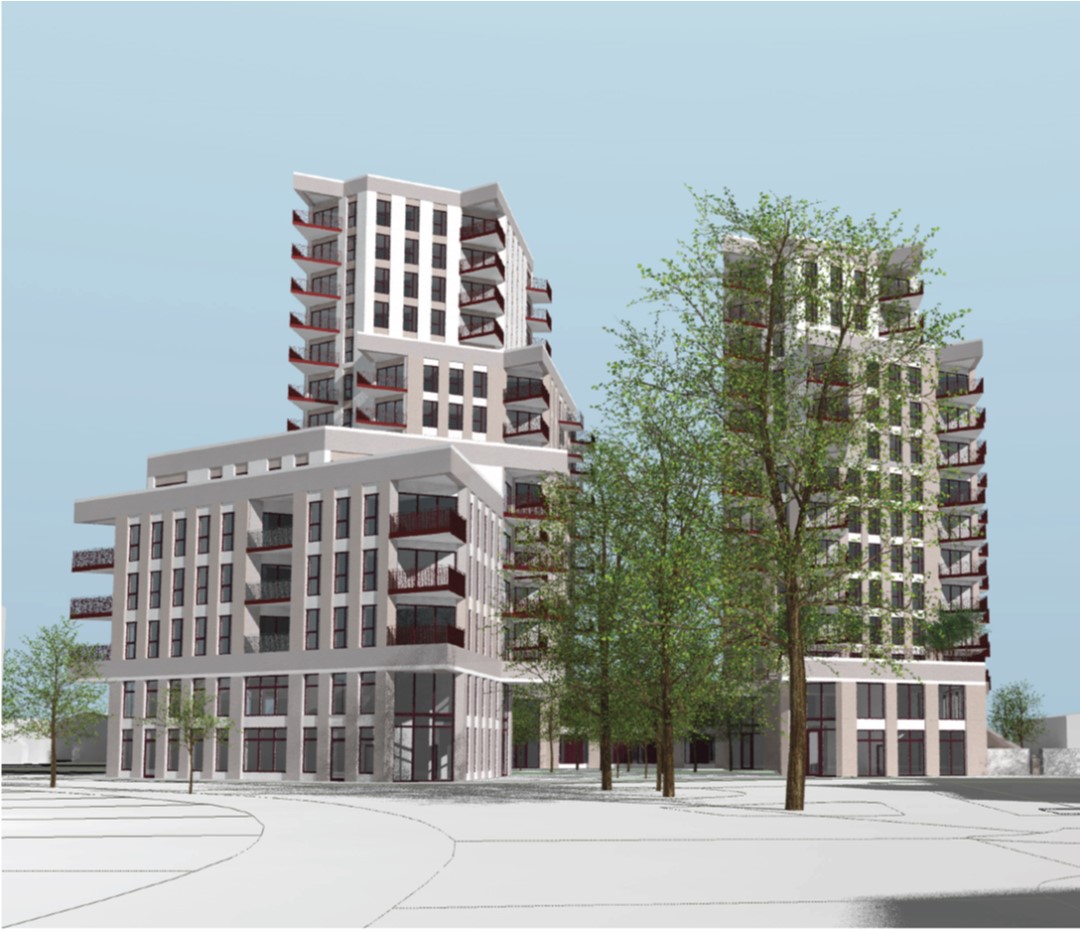
Enfield Council’s Planning Committee recently allowed an applicant to reduce the number of social rent homes on a previously approved application from 46 down to zero, showing how developers are able to play the system.
The controversial scheme in Brimsdown was initially approved in December 2020 on the basis that 46 of the 148 homes would be genuinely affordable social rent. At the time, the Planning Committee were told that the number of social rent homes would offset the negative issues raised about the scheme e.g. its height, the loss of industrial floorspace, and the impact on the local community. The Council took 15 months to formally publish the decision.
Last week the application was brought back to the Planning Committee because the applicant had carried out a financial viability assessment which now showed the scheme would not be able to deliver ANY genuinely affordable social rent homes.
Officers pushed committee members to approve the revised scheme because their previous approval in December 2020 meant that they had accepted the principle of using the land for a residential scheme, instead of retaining its existing industrial use.
Some members of the Planning Committee questioned why they had not been told in December 2020 that the financial viability of the scheme had not been assessed. In response, planning officers blamed ‘flawed’ London Plan policies.
The applicant’s financial viability assessment was submitted to the Council in September 2022, but the Council has still not published it, despite Government guidelines stipulating that viability assessments should be made publicly available. From the information we have seen, it appears the applicant is claiming that the site’s strong existing financial value as an industrial site, means that the profit margin will be too small to fund social rent housing. The high value of the land is due to fact that Enfield needs industrial floorspace, particularly in areas like Brimsdown.
But what does this mean for Enfield? It means we are now losing valuable industrial land (which could be used to generate significant employment opportunities, and will need to be replaced elsewhere), without getting the benefit of the genuinely affordable social rent homes that were originally promised. In the words of one of the Planning Committee members ‘we’ve been done over’.
A number of negative issues with the original scheme were only accepted because of the significant number of social rent homes it proposed to deliver. In our opinion, removing this benefit alters the planning balance and the acceptability of the original scheme. Planning officers and committee members had the opportunity to refuse the scheme based on the loss of much needed industrial land, without sufficient compensatory benefits. Most members of the committee accepted the change to the application without expressing any dissatisfaction about the loss of all the social rent homes.
The application will now be referred to the GLA for their decision. GLA planning officers have already expressed concerns to Enfield Council about the significant reduction in affordable homes, as well as access to amenity space (including children’s play spaces), the height of the buildings and harm to locally listed heritage assets.
 Better Homes Enfield