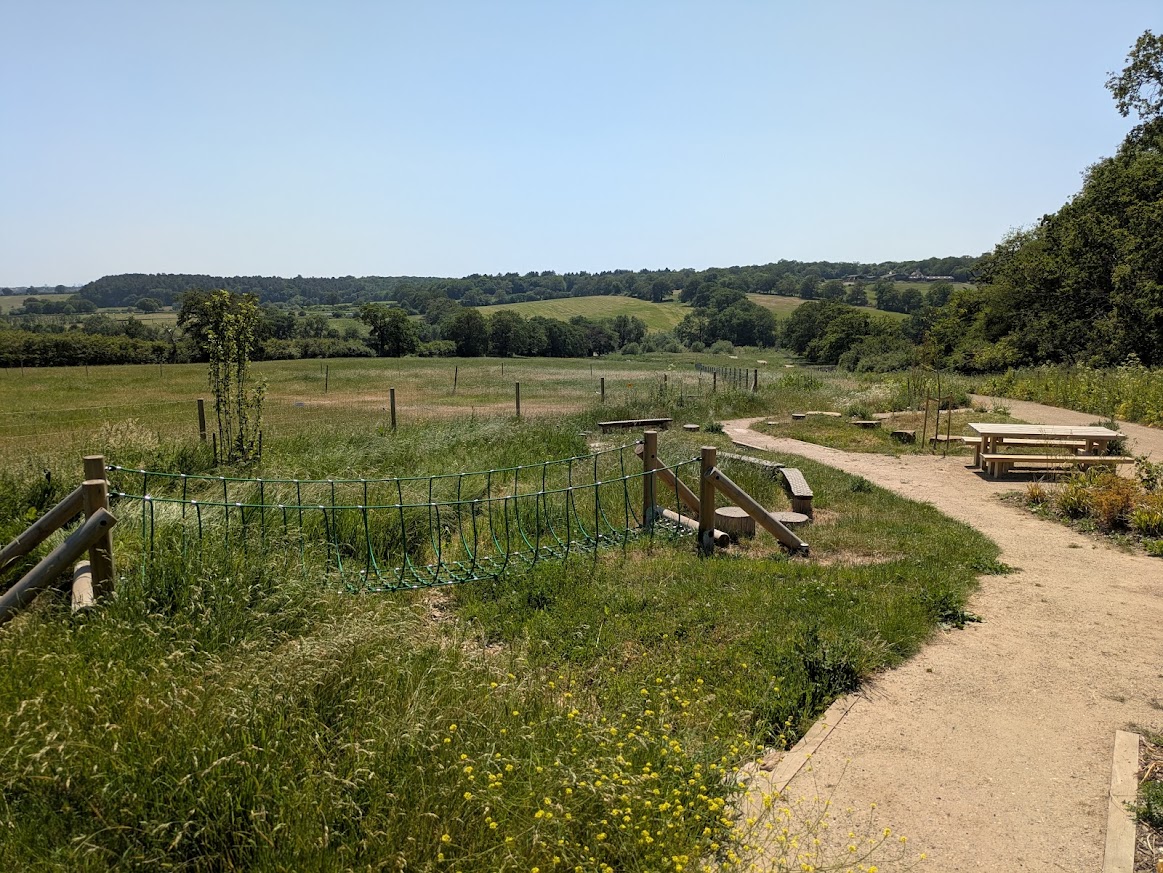
The most important fact about Enfield’s proposed new town is also the one most often left out: nothing has been decided.
The Government has not confirmed that Crews Hill and Chase Park will be taken forward. If they are, it has not decided the area the new town would cover. There is no red-line boundary. Nor has it decided which land within that boundary would be built on, protected or used for roads, schools, parks and other infrastructure.
Earlier this week, housing minister Matthew Pennycook said final locations would be announced before the end of the year. He confirmed that the proposed list could still change.
That is at odds with the impression often given. For example Polly Toynbee’s recent Guardian article read as though a 21,000-home new town had been approved and the only remaining obstacle was a collection of “Nimbys” defending a golf course.
Pennycook rejected this sort of argument when he appeared before the House of Lords Built Environment Committee this week: “I have always found the Yimby/Nimby debate quite reductive.”
We agree. Some people oppose almost every development. But many others support new homes while questioning the tenure, scale, location or quality of a particular scheme. As Pennycook recognised, those concerns can be entirely justified.
He was also refreshingly honest that some new town sites will take “many decades to build out”. This means new towns may help meet long-term housing needs. They are not an answer for families and individuals experiencing homelessness today, and they should not become a distraction from addressing today’s crisis. More on that here, here and here.
What has actually happened?
Between 23 March and 19 May, the Government consulted on its draft national New Towns Programme. The consultation considered the seven proposed locations, some potential alternative locations, a draft planning policy statement and a Strategic Environmental Assessment, or SEA.
It was not a detailed consultation on a finished Enfield scheme. Pennycook said it concerned “the programme as a whole, not individual sites or the detailed delivery of those”.
The Government received nearly 3,000 responses, some of them incredibly detailed, and is still considering them. Our 48-page response was one of them and can be downloaded here.
Pennycook was clear about what remains missing:
“We do not have specified delivery vehicles, funding packages and everything at this stage, but all of that will come.”
Funding will be confirmed only after the final locations and delivery arrangements have been settled. The Government is still “a little bit away from the site-by-site clarity that people are rightly looking for”.
Pennycook also promised a future conversation with people in each area once the Government has “very clear offers and propositions”. That conversation should happen before decisions are made. But his words confirm that there is not yet a clear offer for Enfield.
The environmental assessment is not good enough
The SEA was supposed to help the Government decide which locations should proceed by assessing their environmental effects and reasonable alternatives.
Pennycook stressed its importance. We agree. Unfortunately, our consultation response found serious problems:
- No clear development boundary was provided, making it impossible to assess the location-specific environmental impacts properly.
- Crews Hill and Chase Park were combined without showing that they could function as one coherent town.
- Existing businesses, horticulture, jobs, footpaths, historic landscapes and Sites of Importance for Nature Conservation were not properly treated as assets around which development should be planned.
- Major questions about transport, ecology, water, carbon, infrastructure and business displacement were postponed until later. Mitigation was assumed but not properly considered or tested.
- Some alternative new town locations that were not selected scored as well as, or better than, Crews Hill and Chase Park. It remains to be seen whether any will now be taken forward instead.
- The Government did not show how many of the claimed 21,000 homes would genuinely be additional rather than already planned or diverted from Enfield’s brownfield sites.
In short, the SEA identified problems and then left them for another day. This is precisely what concerns local people. How those problems would be resolved was largely left unanswered.
Read Better Homes Enfield’s full consultation response here
Enfield has a better offer
Enfield does not have to choose between 21,000 homes and no homes.
It already has one unfinished new town in all but name. Meridian Water was intended to deliver 10,000 homes on brownfield land beside a new railway station, with later plans suggesting capacity for up to 13,000. Only around 300 homes have been completed. A new town designation, or a mayoral development corporation, could make a big difference in getting this scheme delivered more quickly and, hopefully, with more genuinely affordable homes.
Overall, there are more than 700 brownfield sites across Enfield, of all shapes and sizes, capable of delivering tens of thousands of homes. A new town at Crews Hill should not be so big that it makes delivering those sites harder.
There is also scope for a smaller new town around Crews Hill station. It could still deliver thousands of homes without swallowing Chase Park or treating northern Enfield as empty land. It should retain and build around existing businesses, horticulture, jobs, landscapes and wildlife sites. These are the foundations of a real place. They are assets, not clutter to be cleared away or “unplanned sprawl”.
Enfield North’s Labour MP, Feryal Clark, has made a similar argument. Writing in Enfield Dispatch, she called 21,000 homes excessive and argued that Chase Park and other high-quality Green Belt land should be removed from the scheme. We agree. A smaller scheme could still make a major contribution, particularly if the new homes are genuinely affordable.
That is the real debate in Enfield. It is about what can be built, where it should go and how it will be delivered.
As it stands, nothing has been decided. Nor is there any coherent published evidence showing that 21,000 homes across Crews Hill and Chase Park are possible or deliverable.

